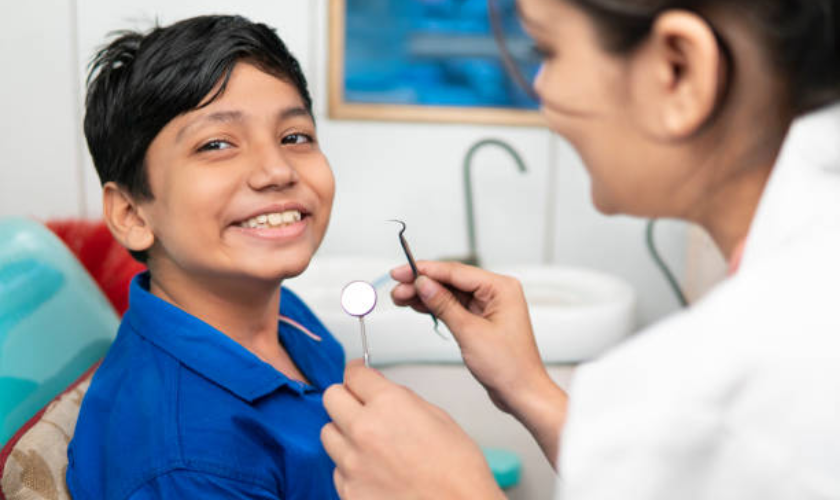
Can a Child Wear a Mouthguard With Braces or Invisalign?


If your child plays soccer, football, basketball, lacrosse, or another sport where a ball or player could hit the face, you may wonder whether a mouthguard is safe during orthodontic treatment.
Yes, children can wear mouthguards with braces or Invisalign, and they should wear appropriate protection during sports that put their teeth at risk of injury. The type of mouthguard your child needs depends on whether they wear braces, clear aligners, or another orthodontic appliance.
At Woodside Pediatric Dentistry, Dr. Jennifer Woodside and our pediatric dental team in Warrenton help families protect their children’s developing smiles through every stage of dental care. If your child wears braces or Invisalign, we can help you understand what type of mouthguard may be appropriate for their sport and dental needs.
Why Does My Child Need a Mouthguard During Sports?
A mouthguard acts as a protective barrier between the teeth and an impact. The American Dental Association recommends properly fitted mouthguards for sports and recreational activities where there is a risk of dental or orofacial injury.
For children with braces, there is another concern. Brackets and wires can irritate the lips and cheeks if the face takes a direct hit. An impact can also damage orthodontic hardware, potentially breaking a bracket or bending a wire.
That does not mean your child has to stop playing sports during orthodontic treatment. It means they need the right protection.
If your child is active in sports, talk with their pediatric dentist in Warrenton or orthodontist about the type of mouthguard that best fits their current treatment.
Can a Child Wear a Mouthguard With Braces?
Yes. Children with braces should wear a properly fitted orthodontic mouthguard during sports where there is a risk of contact or facial injury.
A mouthguard for braces needs to fit comfortably over the brackets and wires without placing unnecessary pressure on them. Because teeth move throughout orthodontic treatment, the fit may also need to be checked and adjusted over time.
Can My Child Use a Regular Store-Bought Mouthguard?
Not every mouthguard is suitable for braces.
Store-bought mouthguards are available in different designs, including stock and boil-and-bite options. However, children with braces should not simply choose a mouthguard based on size or appearance.
A mouthguard that does not fit properly may move around during activity or cause discomfort. Ask your child’s pediatric dentist or orthodontist whether a particular product is appropriate for their braces.
The American Dental Association recognizes stock, boil-and-bite, and custom-made mouthguards. The best option depends on the child’s mouth, appliance, sport, and level of protection needed.
What Makes an Orthodontic Mouthguard Different?
An orthodontic mouthguard is designed to provide space for brackets and wires while remaining comfortable during activity.
Your child may need a different mouthguard as their orthodontic treatment progresses. As teeth move and the mouth changes, a guard that once fit well may become loose or uncomfortable.
If you notice that the mouthguard is rubbing against the brackets, does not stay in place, or no longer fits comfortably, bring it to your child’s dental or orthodontic appointment.
Can a Child Wear a Mouthguard With Invisalign?
Yes, but the instructions are different from those for braces.
Invisalign aligners are removable, which can make sports participation more straightforward. For contact sports, the American Association of Orthodontists recommends removing clear aligners and wearing a sports mouthguard instead.
If your child receives pediatric dental care in Warrenton and is also undergoing Invisalign treatment, follow the instructions provided by their treating orthodontist regarding when to remove and replace the aligners.
What Should My Child Do With Invisalign During Sports?
If your child’s orthodontist tells them to remove their aligners for sports:
- Bring the Invisalign case to every practice and game.
- Remove the aligners as instructed before contact play.
- Keep the aligners in their case while they are out of the mouth.
- Do not wrap them in a napkin or leave them loose in a sports bag.
- Rinse the aligners before putting them back in.
- Follow the wear schedule provided by the treating orthodontist.
The biggest practical issue is often not the game itself. It is remembering where the aligners were placed afterward.
Does My Child Need a Mouthguard for Every Sport?
Not necessarily, but many sports involve some risk of contact, falls, or facial impact.
Mouthguards are particularly important for sports such as:
- Football
- Hockey
- Lacrosse
- Wrestling
- Boxing and martial arts
They may also be appropriate for basketball, soccer, baseball, softball, gymnastics, skateboarding, and other activities where a child could fall or collide with another player.
The American Dental Association recommends mouthguards for sports where there is a risk of dental or orofacial injury. If you are unsure about your child’s particular activity, ask your children’s dentist in Warrenton or orthodontist for guidance.
Should My Child Get a Custom Mouthguard?
Not every child needs a custom-made mouthguard.
For some children, a properly fitted over-the-counter mouthguard may provide suitable protection. Custom mouthguards are made specifically for an individual’s mouth and can offer a more personalized fit.
A custom option may be worth discussing if your child:
- Plays a high-contact sport
- Practices or competes frequently
- Has braces or another orthodontic appliance
- Has trouble keeping a standard mouthguard in place
- Finds standard mouthguards uncomfortable
- Needs a more individualized fit
The goal is not simply to choose the most expensive mouthguard. The mouthguard should fit properly, stay in place, feel comfortable, and work with your child’s orthodontic treatment.
Your pediatric dental team in Warrenton can help you determine whether your child should use an over-the-counter or professionally fitted option.
How Should I Clean My Child’s Mouthguard?
A mouthguard needs regular cleaning because saliva, food particles, and bacteria can build up on its surface.
After your child uses it:
- Rinse the mouthguard with cool water.
- Clean it according to the manufacturer’s instructions.
- Allow it to dry completely.
- Store it in a ventilated protective case.
- Keep it away from hot water and excessive heat.
- Check it regularly for cracks, tears, rough edges, or changes in fit.
Do not let your child chew on the mouthguard. Chewing can damage the material and shorten its useful life.
When Should a Mouthguard Be Replaced?
There is no single replacement schedule that applies to every child.
Replace the mouthguard if it becomes damaged, loose, uncomfortable, or no longer fits properly. Children may also need a new mouthguard as their mouths grow or their teeth move during orthodontic treatment.
This is particularly important for children with braces. Their teeth are changing throughout treatment, so a mouthguard that fit well several months ago may not provide the same fit today.
Bring the mouthguard to your child’s dental or orthodontic appointments when possible. Your pediatric dentist can check whether it still appears appropriate for your child’s current dental needs.
What If My Child Gets Hit in the Mouth While Wearing Braces?
A mouth injury does not always result in visible damage immediately.
After an impact, check your child for:
- A loose or chipped tooth
- Bleeding or significant swelling
- A broken bracket
- A displaced or bent wire
- New tooth sensitivity or pain
- Difficulty biting normally
- A tooth that looks different from before the injury
Contact your child’s dental or orthodontic team if you notice damage to a tooth or orthodontic appliance.
For a serious injury, including uncontrolled bleeding, difficulty breathing or swallowing, a suspected jaw fracture, or a permanent tooth that has been knocked out, seek urgent medical or dental care.
If a permanent tooth is completely knocked out, prompt treatment is important. Do not wait for the next routine appointment.
Protect Your Child’s Smile During Sports
Orthodontic treatment does not mean your child has to sit on the sidelines. With the right protective equipment and a mouthguard that fits their current dental needs, children can continue enjoying the sports and activities they love.
At Woodside Pediatric Dentistry, Dr. Jennifer Woodside provides children’s dental care in Warrenton and helps families protect their children’s smiles during sports and everyday activities. Visit our dental practice in Warrenton to discuss the right mouthguard and oral care for your child.
Not sure which mouthguard is right for your child? Contact our pediatric dental team to discuss your child’s needs and schedule an appointment in Warrenton.
Frequently Asked Questions
Can a child wear a mouthguard with braces?
Yes. Children with braces should use a properly fitted mouthguard during sports that carry a risk of dental or facial injury. The mouthguard should accommodate the brackets and wires without causing discomfort or interfering with treatment.
Can a child wear a mouthguard with Invisalign?
Yes. For contact sports, the American Association of Orthodontists recommends removing clear aligners and wearing a sports mouthguard. Your child’s orthodontist should provide instructions about when the aligners should be removed and replaced.
Is a boil-and-bite mouthguard safe with braces?
It depends on the particular mouthguard and your child’s orthodontic treatment. Children with braces should ask their dental or orthodontic provider whether a specific boil-and-bite product is appropriate rather than assuming any mouthguard will fit safely.
Does my child need a mouthguard for basketball?
A mouthguard may be appropriate because basketball involves running, jumping, falls, and player contact. The risk of dental injury varies by activity and level of play, so discuss your child’s needs with their dental or orthodontic provider.
How often should a child with braces replace a mouthguard?
Replace the mouthguard when it becomes damaged, loose, uncomfortable, or no longer fits properly. Because children’s mouths grow and teeth move during orthodontic treatment, the fit should be checked periodically.
Can a mouthguard damage braces?
A properly selected and fitted mouthguard is intended to protect the mouth and orthodontic appliances during sports. If the guard catches on brackets, rubs against the cheeks, or does not stay in place, stop using it and ask your dental or orthodontic provider about another option.